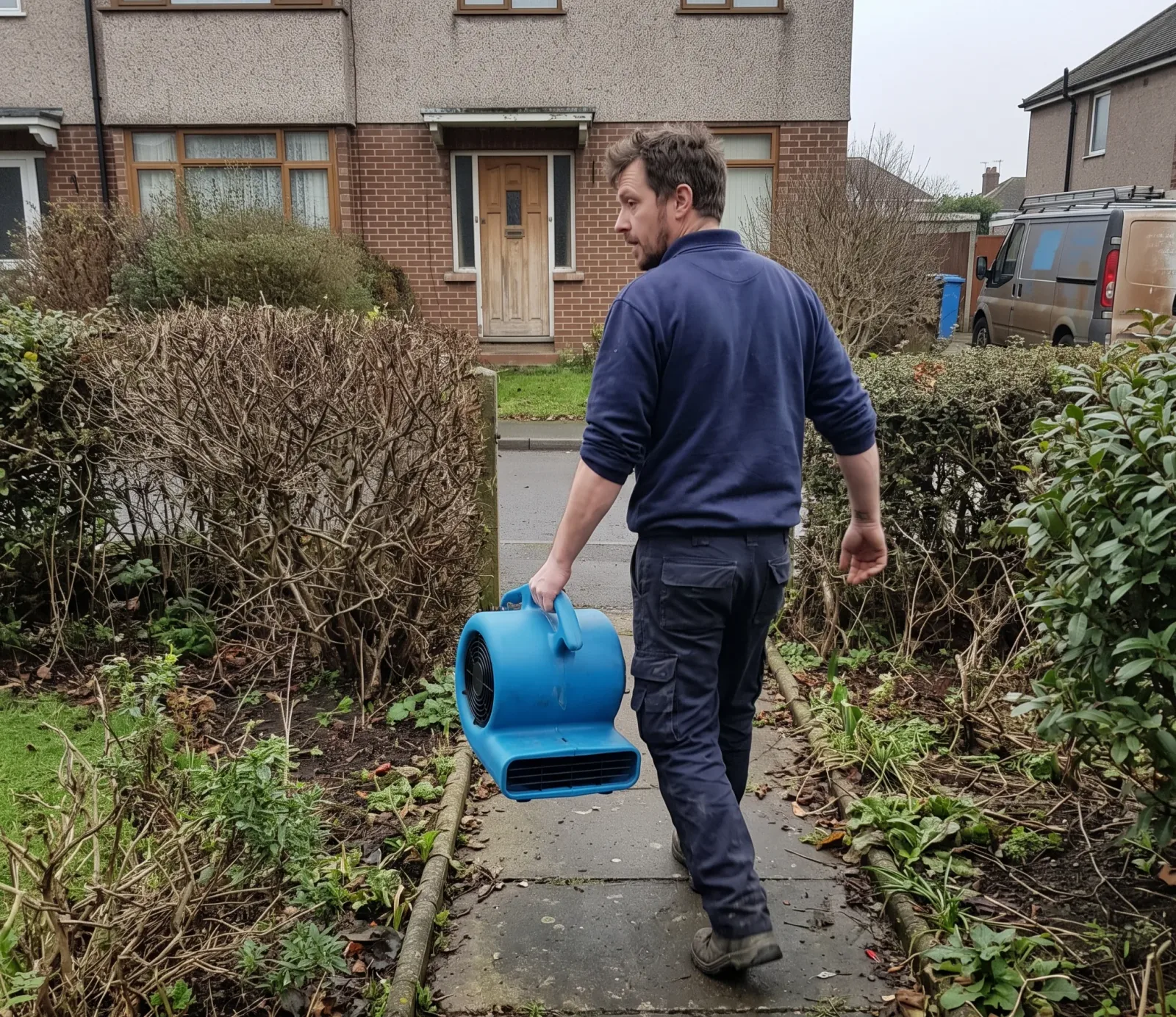
What IICRC S500 Means for a Fort Lauderdale Job
What IICRC S500 certification means for a Fort Lauderdale water damage crew, and why it matters before you sign anything.
IICRC S500 is the published reference standard for water damage restoration. It defines water categories, drying classes, and the moisture documentation a technician should follow. Certification means a person passed training on that standard; it is not a Florida contractor license, which is a separate requirement for repair work under Chapter 489.
What the S500 Standard Actually Covers
Water damage in a Fort Lauderdale home, whether from a canal-front seawall failure, a flat roof leak after a tropical downpour, or a burst supply line, calls for a contractor who follows a real standard, not guesswork. The IICRC S500 is the reference standard for water damage restoration, spelling out how drying, moisture testing, and structural repair should be done. Understanding it helps a Fort Lauderdale homeowner tell a properly trained crew from one working off habit alone.
The standard covers water categories and classes, drying equipment placement, moisture monitoring, and when materials must be removed rather than dried in place. It does not tell a contractor exactly what to do on every job. It sets a floor of competency and judgment. A Fort Lauderdale contractor working a flooded first floor near the Intracoastal still has to apply that judgment to a slab foundation and a humid coastal climate.
This governing document does not name a required drying time or a specific equipment brand. It sets a standard of care: what a competent firm inspects, measures, and documents before calling a Fort Lauderdale job dry. A licensed pro trained to it treats a canal-front condo differently than a slab home near Las Olas Boulevard, because the standard asks for judgment tied to the structure, not a fixed checklist applied the same way everywhere.
Why Certification Matters in a Canal City
Certification is earned by completing training hours through an approved school and passing an exam tied to the governing document itself, not a general course on cleaning. A certified technician has studied moisture mapping, psychrometry, and antimicrobial application as they apply to a Fort Lauderdale-style slab foundation and humid coastal air. Firm compliance is separate from individual credentials; a company can hold its own accreditation showing it maintains equipment standards and a code of ethics across every job the licensed pros we connect you with take on.
Firms can also carry an IICRC firm certification, which is a separate step called firm compliance. It requires the company to employ certified technicians, carry the right insurance, and follow a code of ethics in how it deals with customers. Asking whether a company holds firm certification, not just whether one technician does, is a fair question before work starts on a Rio Vista or Victoria Park property.
- Water Damage Restoration Technician (WRT) covers the basic categories of water, classes of loss, and drying principles used on every Fort Lauderdale job, from a burst supply line to storm surge intrusion.
- Applied Structural Drying (ASD) goes further into psychrometry and equipment placement, the math behind why a Coral Ridge living room dries in three days and a closed-up utility closet takes longer.
- Applied Microbial Remediation Technician (AMRT) covers containment and remediation methods once drying has failed and mold growth has started, distinct from the mold assessor and mold remediator licenses Florida itself requires.
- Odor Control Technician (OCT) addresses lingering smell after flooding, common in homes near the Intracoastal where humidity slows drying and odor sits in porous materials longer than the water itself.
- Each credential requires training hours in a classroom or approved online course, followed by an exam, not just a certificate of attendance for showing up.
- Continuing education keeps the credential active. A technician who never renews is, on paper, no longer current, even if the original course was completed years ago.
What a Certified Technician Has Actually Done
Continuing education keeps a credential current, since the standard of care and best practices in drying science are revised over time as new research changes what competency looks like. A homeowner in Victoria Park or Coral Ridge dealing with storm surge damage should ask whether the technician's certification is active, not expired, and whether the firm itself carries compliance standing. Those two questions separate a documented, defensible drying job from one that only looks finished on the surface.
Certification also is not a Florida license. Chapter 489 of the Florida Statutes governs contractors doing structural repair, plumbing, or electrical work as part of a restoration job, and that licensing sits separately from IICRC training. A technician can hold every IICRC credential available and still need a properly licensed contractor for drywall or wiring repairs in a Coral Ridge or Harbor Beach home.
- The IICRC itself is a nonprofit standard-setting and credentialing body. It does not inspect job sites in Fort Lauderdale or anywhere else; it certifies individuals and firms who pass its courses and agree to its code of ethics.
- Firm compliance is separate from individual technician certification. A company can carry an IICRC firm registration while employing a mix of certified and still-training staff, so ask which applies to the people actually assigned to the job.
- S500 is written as a reference standard, meaning it sets out best practices and competency benchmarks rather than a fixed checklist. Judgment still matters, especially with unusual jobs like a flat roof leak feeding water into a Sistrunk shotgun house wall cavity.
- Accreditation of the training itself, not just the diploma, is part of how the IICRC governs its own programs, which is why the governing document behind S500 gets revised periodically rather than staying frozen for decades.
Credentials Compared Side By Side
Drying speed matters because damp materials left standing invite mold growth within a short window, which is one reason the S500 puts so much weight on moisture readings and airflow rather than guesswork. A certified technician documents moisture content in walls and flooring with a meter, not by touch, and keeps that record as the job progresses.
In Florida, mold work itself sits under a separate license from DBPR, the state's Department of Business and Professional Regulation, once the affected area passes the size threshold set in state law. A restoration technician who is only S500-certified for drying is not automatically licensed to perform mold remediation. Fort Lauderdale's humidity makes that handoff between drying and mold work come up often enough to ask about upfront.
| Credential | Who Holds It | What It Confirms |
|---|---|---|
| IICRC WRT | Individual technician | Water damage restoration training hours completed |
| IICRC ASD | Individual technician | Applied structural drying competency |
| Firm Certification | The company itself | Company agrees to code of ethics and standards |
| DBPR Mold License | Individual assessor or remediator | State law requirement for mold work in Florida |
| Chapter 489 License | General or specialty contractor | State law requirement for structural repair work |
Firm Compliance Versus One Certified Person
The S500 also sets expectations for how a job site should be contained and monitored, including drying equipment checks over multiple days rather than one visit. A slab-foundation home in Melrose Park or Coral Shores dries differently than a raised structure, and the standard expects the technician to adjust placement of air movers and dehumidifiers to the specific building, not run a fixed checklist.
Because S500 is a written, published standard, a homeowner can ask a contractor direct questions grounded in it: which category of water was found, what class of drying difficulty was assigned, and what moisture targets are being used to call the job finished. A contractor who cannot answer in those terms may not be working from the standard at all, whatever certificate is on the truck.
Questions to Ask Before You Hire
None of this replaces basic license checks. A Fort Lauderdale homeowner should confirm any structural, electrical, or plumbing repair tied to the water loss is done by someone properly certified or registered under Chapter 489, separate from whatever IICRC training the drying technician holds. The two credentials answer different questions and neither substitutes for the other.
The practical use of all this for a Fort Lauderdale owner is simpler than the standard itself: ask what training the technician holds, ask whether the firm carries its own compliance credential, and ask which edition of the standard they follow. Those three questions separate a contractor working from a real governing document from one working from habit near the New River or the beach.
S500 Certification at a Glance
- S500 is the IICRC's governing document for water damage restoration, first published in the 1990s and revised in later editions.
- WRT, ASD, and AMRT are separate credentials; a technician can hold one, two, or all three.
- Florida requires a DBPR mold license for mold work, separate from any IICRC credential.
- Chapter 489 contractor licensing applies to repair work, not to extraction and drying alone.
- The IICRC maintains a public registry to verify a technician's or firm's certification status.
- Certification lapses without continuing education, even if the original training was completed.
Frequently Asked Questions
What does IICRC certified actually mean?
Ask to see the technician's IICRC card and ask which edition of the S500 standard the firm trains to. Then ask separately whether any repair work, drywall, plumbing, or electrical, will be done by someone properly licensed under Florida's Chapter 489, since that credential is not the same one.
Is S500 a Florida law or just a standard?
S500 is a consensus standard, not a Florida statute. No state law forces a company to follow it. But insurers and courts treat it as the standard of care, so a Fort Lauderdale contractor ignoring it takes on real risk if the drying job is challenged later.
Does certification cost more for my Rio Vista home?
Certified firms are not automatically pricier. The credential covers training, not markup. A canal-front home in Rio Vista or a condo near Galt Ocean Mile needs the same moisture readings and drying log either way; certification just means someone qualified is reading them.
Can an uncertified crew still do the work?
Yes, nothing in Florida law requires an S500 credential to touch water damage. Repairs involving drywall, electrical, or plumbing still fall under Chapter 489 contractor licensing. But a homeowner near Las Olas Isles has no real recourse if uncertified drying work fails.
How do I check a certification before hiring?
Ask for the technician's IICRC certificate number and the firm's certification status, not just a logo on a truck door. The IICRC maintains a public registry. For a Coral Ridge or Victoria Park job, ask to see the moisture-mapping and drying documentation too.
Ready to talk to a certified pro?
Ask any water damage company for their IICRC certificate number before they touch your Fort Lauderdale property. If they can't produce one on the spot, call (954) 910-2507 and we'll match you with a firm that can.
Call (954) 910-2507